
Can I Whiten My Teeth With Crowns, Fillings, Veneers, or Gum Problems?
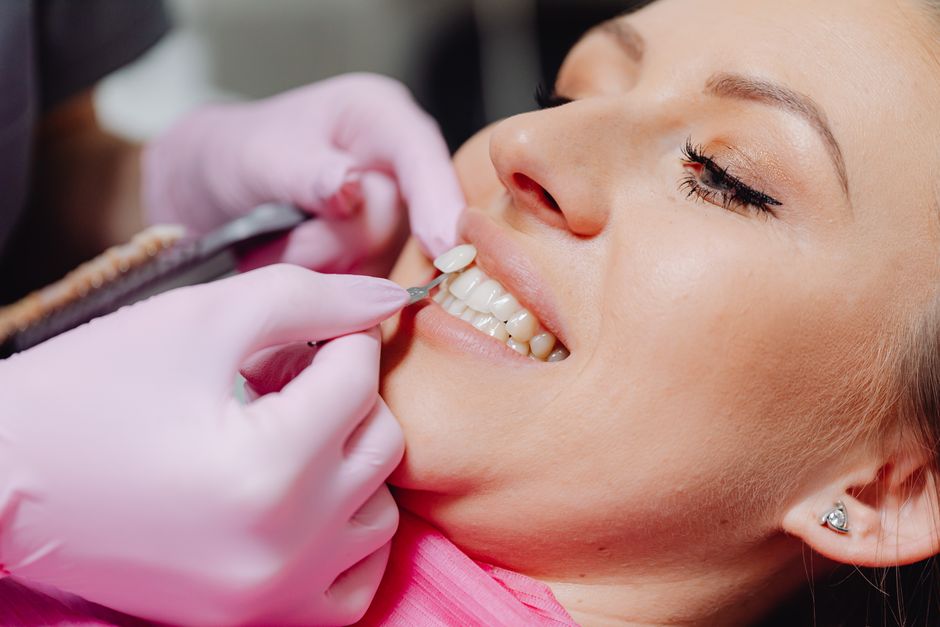
At-home whitening is appropriate only when your teeth and gums are healthy and the color you want to change is natural enamel. Peroxide does not whiten crowns, veneers, bonding, or tooth-colored fillings, so whitening can expose a mismatch. Cavities, gum disease, cracked teeth, sensitivity, exposed roots, and uneven gray or injury-related stains need a dental examination before treatment.
Will whitening strips make my crowns and natural teeth look mismatched?
Yes. Whitening strips can make crowns and natural teeth look mismatched because they lighten natural enamel while leaving the crown unchanged.
The American Dental Association states that bleaching affects natural teeth, not tooth-colored restorations such as crowns and implants. MouthHealthy gives the same warning for caps, veneers, crowns, and fillings. The result is simple: a crown matched to your old tooth shade can look darker after whitening.
Peroxide breaks stains into smaller pieces, which makes natural teeth appear lighter. It does not repaint dental work. Whitening changes the background; it does not change the restoration.
This matters most in the smile line. A back crown can be less noticeable. A front crown, veneer, or bonded edge can become the fixed dark point in an otherwise lighter smile.
| What you have | What peroxide whitening changes | Practical path |
|---|---|---|
| Natural enamel only | Can lighten stains | OTC products or dentist-supervised treatment, based on the stain and sensitivity |
| Existing crown or veneer | Does not lighten the restoration | Whiten natural teeth first, then discuss replacement shade if needed |
| Front tooth bonding or filling | Does not lighten the restoration | Plan whitening and later color matching with a dentist |
| Gray, injury-related, or medication-related discoloration | Can respond poorly or not at all | Get the cause assessed before buying a kit |
Over-the-counter products generally contain lower peroxide concentrations than dentist-prescribed home systems or office treatment, according to the ADA. Dentist-supervised tray systems commonly use 10% to 38% carbamide peroxide and have reported daily treatment times of 2 to 10 hours for 6 to 28 days. More strength does not solve a restoration mismatch. It only changes natural tooth structure.
Can I whiten my teeth if I have fillings on my front teeth?
You can whiten the natural enamel around front fillings, but the fillings will not get whiter and can become easier to see.
That is not a defect in the kit. It is the boundary of the material. The American Dental Association notes that only natural teeth respond to bleaching agents, while the restoration remains its original color.
The best sequence is often to examine the tooth, whiten the natural enamel, then have a dentist match and replace a visibly mismatched filling if replacement is appropriate. This avoids choosing a new filling shade before the surrounding tooth reaches its post-whitening color.
Timing matters when adhesive work is planned. A PubMed-indexed laboratory study found better adhesive penetration when composite restorations were placed 7, 14, or 30 days after bleaching than when placed immediately. Its conclusion: allow at least seven days between enamel bleaching and adhesive composite restoration placement.
Do not use whitening to cover a dental problem. The Journal of the American Dental Association advises that decay, sensitive or cracked teeth, infection, and periodontal problems be diagnosed and treated before whitening. A bright tooth is not always a sound tooth.
Do veneers or bonding get whiter after teeth whitening?
No. Veneers and bonding do not get whiter after teeth whitening.
The same rule applies to crowns and tooth-colored fillings. Existing work stays where it is. If veneers or bonding once matched nearby teeth, whitening can make the dental work appear darker by comparison.
Not every uneven shade points to a restoration issue. MouthHealthy reports that yellow teeth generally bleach well, brown teeth can respond less well, and gray-toned teeth can fail to respond. Discoloration tied to medications or tooth injury also may not improve. A dental examination can identify the likely cause before you spend time whitening a color that peroxide cannot shift.
A review in the National Center for Biotechnology Information describes typical OTC gel improvement as 1 to 2 shades in mild cases. It also identifies veneers, bonding, or crowns as possible esthetic options for stains that are difficult to bleach, including metal-containing stains. Whitening is one tool. It is not every tool.
When should you pause whitening and book a dental examination?
Pause before whitening if your gums bleed easily, look red or swollen, pull away from teeth, smell persistently unpleasant, or if teeth feel loose or your bite has changed. MouthHealthy lists these as warning signs of gum disease and advises seeing a dentist when gum disease is suspected.
Gingivitis is the early, reversible stage of gum disease and can generally be addressed with professional cleaning plus daily brushing and flossing. Periodontitis can involve loss of the tissue and bone that support teeth. Whitening belongs after diagnosis and treatment, not before it.
Sensitivity also deserves a plan. The ADA reports temporary mild-to-moderate sensitivity in up to two-thirds of users early in bleaching; strip or tray sensitivity often begins within 2 to 3 days and usually resolves by the fourth day after treatment. The NCBI review identifies tooth sensitivity and mild gum irritation as common risks linked to peroxide concentration, treatment duration, and formulation.
If gum bleeding is substantial and you take an anticoagulant, dental assessment remains the first step. This guide to Eliquis side effects and bleeding emergencies covers when medication-related bleeding needs urgent medical attention.
The decision is not strips versus trays. The first decision is whether the tooth color is bleach-responsive and whether the mouth is ready for peroxide. A healthy mouth with natural yellow staining fits whitening. A mouth with active disease, exposed roots, front restorations, or gray internal discoloration fits an examination first.
Frequently Asked Questions
Why did my teeth look uneven after using a whitening kit?
Natural enamel lightens while crowns, veneers, bonding, and tooth-colored fillings keep their existing shade. Uneven color also occurs when stains have different causes: yellow teeth often respond well, brown teeth respond less well, and gray discoloration from medication or injury may not respond.
Is it safe to whiten teeth if I have cavities, sensitive gums, or exposed roots?
No whitening decision should come before a dental examination when you have cavities, sensitive or cracked teeth, infections, or periodontal problems. The Journal of the American Dental Association advises treating these issues first because bleaching can cause discomfort or aggravate existing problems. Bleeding, swollen, receding, or loose gums also warrant evaluation.
Should I whiten my natural teeth before replacing a crown or veneer?
Yes, whitening natural teeth first gives a dentist a stable target shade for a new crown, veneer, or filling. For adhesive composite bonding after bleaching, a PubMed-indexed laboratory study concluded that bonding should be delayed for at least seven days.
Sources
- American Dental Association: Whitening
- MouthHealthy: Teeth Whitening
- The Journal of the American Dental Association: Tooth Whitening
- National Center for Biotechnology Information: Tooth Whitening: What We Now Know
- PubMed: The Influence of Time Interval Between Bleaching and Enamel Bonding
- MouthHealthy: Gum Disease
Keep reading

Are My Under-Eye Concerns Puffiness, Bags, Hollows, or Pigmentation?
Learn how to distinguish fluid puffiness, fat bags, tear-trough hollows, and dark-circle pigmentation before choosing treatment.

How Do I Choose Breast Implant Size, Profile, and Placement?
A practical guide to breast implant size, cc, profile, placement, anatomy, risks, and the questions to bring to a surgical consultation.