
Should You Walk or Ride a Golf Course?
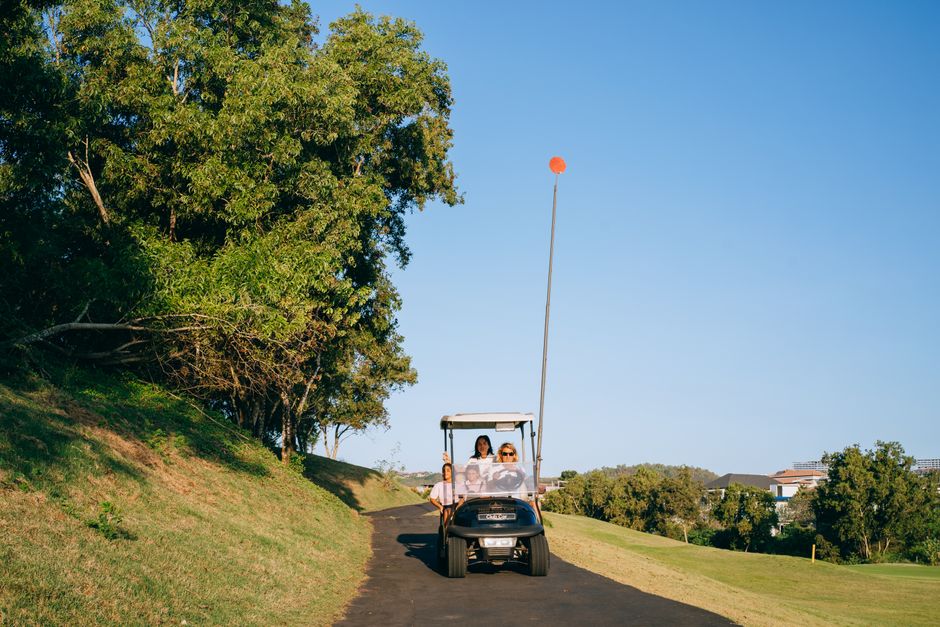
Walk if the course permits it, the terrain and total distance fit your ability, and you want more physical activity; ride if hills, heat, mobility, pace, or course rules make walking impractical. Check the course’s cart and push-cart policies and compare its actual fees before booking, because both access and cost vary by venue.
How far do you walk during 18 holes of golf?
Walking 18 holes usually means about 5.4–7.0 miles, though your route and the course’s length and profile change the total. A round is not simply the distance from tee to green: you also move between holes and around the course.
A rapid review by Luscombe and colleagues in the British Journal of Sports Medicine included 19 research articles. Across most of the studies reviewed, players walking 18 holes covered about 8.7–11.25 kilometers, or 5.4–7.0 miles. The review notes that distance and physical effort depend on factors including course profile, age, body weight, sex, fitness, and whether the player walks or rides.
A smaller crossover study offers a useful comparison, not a universal prediction. Leiker and Kandt compared 15 women playing the same nine-hole course: average distance was 2.92 miles on foot and 1.77 miles while riding. The authors projected about six miles for 18 holes on foot and roughly 3.5 miles when riding. Your course and playing habits may produce a different total.
Use the range to plan, then check the actual layout. Ask the pro shop about distances between holes and whether the route includes long walks from the clubhouse or across the property. If you are unsure how a full round will feel, a shorter round can be a practical way to gauge your pace and comfort before committing to 18 holes.
Is walking a golf course harder than riding in a cart?
Walking typically demands more physical effort than riding because you cover more ground on foot. The difference is real, but how hard it feels depends on the golfer and the course.
In the Leiker and Kandt study, mean heart rate was higher walking than riding: 105.5 versus 94.9 beats per minute. The broader review by Luscombe and colleagues describes golf as generally moderate-intensity physical activity, while emphasizing that intensity varies with the player and conditions. It also reports that those who ride accrue less physical activity than those walking.
Turn that into a decision with three checks:
- Check your capacity. Consider whether several miles on your feet are manageable for you, including the time spent standing and moving between shots.
- Check the ground. Undulating fairways and a hilly or spread-out layout can make the same distance more demanding. Erin Hills, for example, describes its fairways as naturally undulating.
- Check the day. Weather and course conditions can affect comfort and effort. If walking no longer feels manageable, a cart may be the better fit when available and permitted.
Fitness does not have to decide the question in the abstract. If you want the extra activity but have concerns about distance, ask whether the course has a shorter option or permits a push cart. If maintaining energy or mobility matters more for this round, check cart availability and any rules before you arrive.
Do golf courses let everyone walk, or are carts sometimes required?
Walking rules vary by course: some allow walking, some require carts, and others restrict carts or equipment. Confirm the policy for your specific course and tee time rather than assuming that a course either always permits walking or always provides a ride.
Course conditions can change cart access. Golf Lakewood’s official fees page says Fox Hollow and Homestead are cart-path-only under the listed drought conditions, and notes that accessibility flags may allow limited cart access when those rules apply. A cart-path-only rule changes where a cart can go; it does not by itself tell you whether walking or push carts are allowed. Ask the course what the current restriction means for your round.
Some venues set a clear policy. Erin Hills is a walking-only course and prohibits both pull and push carts. Its ADA Guest Golf Cart Policy allows limited-use designated carts by request, with requests made at least two weeks before play. This is a reminder to arrange access needs early and get the venue’s instructions directly.
Before booking, use a short checklist: “Is walking allowed for this tee time? Are push carts permitted? Are carts available, and are there path restrictions? What should I arrange in advance if I need a designated cart?” These questions clarify the practical options without relying on assumptions. Also ask about terrain and distances between holes; a course can permit walking while still presenting a demanding route.
Frequently Asked Questions
Does walking save money compared with renting a golf cart?
It can, but the difference depends on the course’s fees and whether you use a push cart. For example, Golf Lakewood lists a $22-per-rider shared cart and a $5 push cart among its 2026 fees. Check the specific course’s current rates before you book.
How can I tell whether a course is suitable for walking?
Ask whether walking is allowed and whether push carts are permitted, then check the course layout, terrain, and expected walking distance. A course may require carts or limit them to paths under certain conditions, while some walking-only venues prohibit push carts. Match those rules and demands to your fitness and mobility.
Make the choice in order: confirm the rules, estimate the route and terrain, then compare the costs and your energy for the day. Before your next tee time, ask the course those four policy questions and decide whether the extra miles are a benefit or a burden for that round.
Sources
Keep reading

Will a Golf Course Pair Me With Other Players If I Book as a Single?
Learn how single bookings work, when pairing is likely, what to ask the course, and how to feel prepared when you join a group.