
Why Am I Exhausted During the Day Even After Sleeping Eight Hours?
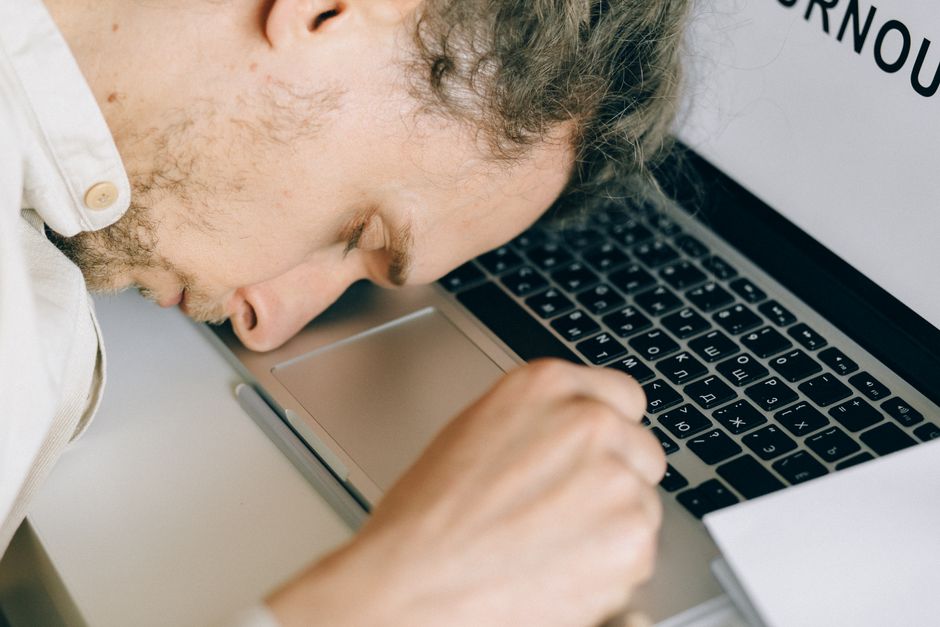
Persistent daytime sleepiness after a full night can come from too little restorative sleep, sleep apnea, narcolepsy, idiopathic hypersomnia, medicines, or medical conditions. The useful next step is not self-diagnosis. Track sleep, unplanned dozing, medicines, and symptoms, then bring that record to a clinician who can decide whether a home test, overnight sleep study, blood work, or daytime nap test fits the pattern.
Why am I exhausted during the day even after sleeping eight hours?
Eight hours in bed does not prove eight hours of restorative sleep. The first question is whether sleep is short, broken, poorly timed, or disrupted by a sleep disorder.
NINDS describes excessive daytime sleepiness in narcolepsy as severe sleepiness that does not improve after enough nighttime sleep. It can arrive as a rapid sleep attack. Cataplexy, a sudden loss of muscle strength linked to strong emotion, is a separate clue that points toward narcolepsy.
Sleep apnea follows a different path. Breathing disturbances interrupt restorative sleep and can lower oxygen during sleep. NHLBI states that untreated sleep apnea can affect concentration, memory, decision-making, and behavioral control.
There are other branches. Insufficient sleep remains possible when the record shows too little actual sleep. Idiopathic hypersomnia enters the clinical discussion when marked sleepiness persists and testing rules out other causes. Medicines and medical conditions also belong on the list. NHLBI notes that clinicians ask about medicines, including opioids, and may check thyroid hormone levels when evaluating related conditions.
| Pattern to record | What it can help separate |
|---|---|
| Bedtime, wake time, awakenings, and sleep quality | Too little sleep from sleep that is long enough but unrefreshing |
| Snoring, breathing symptoms, and witnessed sleep disruption | Possible sleep-related breathing disorder |
| Sudden dozing during quiet or active tasks | Severity and safety impact of daytime sleepiness |
| Emotion-linked muscle weakness, sleep paralysis, or dream-like experiences around sleep | Features clinicians assess when narcolepsy is suspected |
| All medicines, recent travel above 6,000 feet, and medical history | Medication, altitude, and medical contributors |
A record is better than a label. NHLBI says a sleep diary can track sleep length, sleep quality, and daytime sleepiness, giving a clinician information that helps diagnosis.
Should I see a doctor if I fall asleep unintentionally?
Yes. Unintentional sleep episodes deserve clinical assessment, especially when they occur while driving, working, eating, talking, or doing another task that requires sustained attention.
Safety comes first. NHLBI advises people not to drive when tired or sleepy. Its guidance links untreated sleep apnea with impaired driving attention and decision-making and with road accidents.
Bring a short, factual history to the appointment. Include when sleepiness began, the situations in which dozing happens, nighttime sleep timing, awakenings, naps, snoring or breathing symptoms, emotion-linked weakness, all medicines, and recent high-altitude travel. NHLBI notes that travel above 6,000 feet can produce sleep-apnea-like symptoms for several weeks because of the lower-oxygen environment.
Do not use an online score or a symptom checklist as a verdict. A pattern guides the next test. A test establishes or excludes a diagnosis.
How do doctors tell sleep apnea from narcolepsy?
Doctors distinguish sleep apnea from narcolepsy by combining the symptom history with the right sleep tests, not by relying on a questionnaire alone.
For suspected obstructive sleep apnea, the American Academy of Sleep Medicine guideline calls in-laboratory polysomnography the standard diagnostic test after a comprehensive sleep evaluation. For uncomplicated adults at increased risk of moderate-to-severe obstructive sleep apnea, a technically adequate home sleep apnea test can also be used. A negative, unclear, or technically inadequate home result calls for follow-up polysomnography under that guideline.
Home testing is not the preferred route when significant heart or lung disease, possible hypoventilation, chronic opioid use, prior stroke, severe insomnia, or a suspected non-breathing sleep disorder is present. That distinction matters because narcolepsy and idiopathic hypersomnia require a different question: how readily sleep begins during the day and whether REM sleep appears early.
NINDS explains that overnight polysomnography records brain and muscle activity, breathing, and eye movements. It can also look for sleep apnea before a daytime Multiple Sleep Latency Test. The MSLT measures sleep onset and REM sleep during daytime nap opportunities. NINDS reports that people with narcolepsy often enter REM sleep within 15 minutes of falling asleep, while a typical sleep cycle reaches REM after about 60 to 90 minutes.
AASM guidance on the MSLT requires an attended overnight study before the nap test and calls for a sleep diary, with actigraphy when available, to document adequate sleep beforehand. This sequence prevents an avoidable error: mistaking sleep debt or an untreated nighttime disorder for a central disorder of sleepiness.
What is the Epworth Sleepiness Scale, and what score is concerning?
The Epworth Sleepiness Scale is a self-report screen for the chance of dozing in everyday situations, and a score of 11 or higher is concerning enough to consider a sleep medicine specialist.
Harvard Medical School's Division of Sleep Medicine describes eight situations, each rated from 0 for no chance of dozing to 3 for a high chance. The total runs from 0 to 24. The Harvard page does not state a publication year; its guidance classifies 0 to 10 as the normal range in healthy adults, 11 to 14 as mild sleepiness, 15 to 17 as moderate sleepiness, and 18 or higher as severe sleepiness.
| Epworth total | Harvard Medical School interpretation |
|---|---|
| 0 to 10 | Normal range in healthy adults |
| 11 to 14 | Mild sleepiness |
| 15 to 17 | Moderate sleepiness |
| 18 or higher | Severe sleepiness |
The scale measures perceived tendency to doze. It does not diagnose sleep apnea, narcolepsy, idiopathic hypersomnia, or any medical cause. A high score gives the appointment a starting point; the history and testing supply the answer.
Persistent sleepiness is not one problem with one test. Good evaluation works in order: describe the pattern, protect against unsafe sleep episodes, rule in or out disrupted nighttime sleep, then measure daytime sleepiness when the history points there.
Frequently Asked Questions
What happens during an overnight sleep study and MSLT?
An overnight polysomnogram records sleep-related signals including brain activity, muscle activity, breathing, and eye movements. The following daytime MSLT measures how quickly a person falls asleep during scheduled naps and whether REM sleep occurs. The American Academy of Sleep Medicine says the MSLT follows an attended overnight study with adequate sleep documented beforehand.
Can medications, depression, or thyroid problems cause daytime sleepiness?
Medicines belong in the evaluation because some, including opioids, can affect sleep or breathing, according to NHLBI. NHLBI also notes that clinicians may order thyroid hormone blood tests when looking for related medical conditions. The supplied sources do not establish a diagnostic pathway for depression, so that question needs an individual clinical assessment.
Is it safe to drive when I cannot stay awake?
No. NHLBI advises people not to drive when they feel tired or sleepy because untreated sleep apnea can impair driving attention and decision-making and contribute to road accidents. An unplanned sleep episode is a safety signal, not a test of willpower.
Sources
- National Institute of Neurological Disorders and Stroke: Narcolepsy
- National Heart, Lung, and Blood Institute: Sleep Apnea Diagnosis
- National Heart, Lung, and Blood Institute: Living With Sleep Apnea
- American Academy of Sleep Medicine: Diagnostic Testing for Adult Obstructive Sleep Apnea
- American Academy of Sleep Medicine: Recommended Protocols for the MSLT
- Harvard Medical School Division of Sleep Medicine: Epworth Sleepiness Scale
Disclaimer: This article is for general information only and is not medical advice. It is not a substitute for diagnosis or treatment by a qualified healthcare professional. Always speak to your doctor before acting on anything you read here.